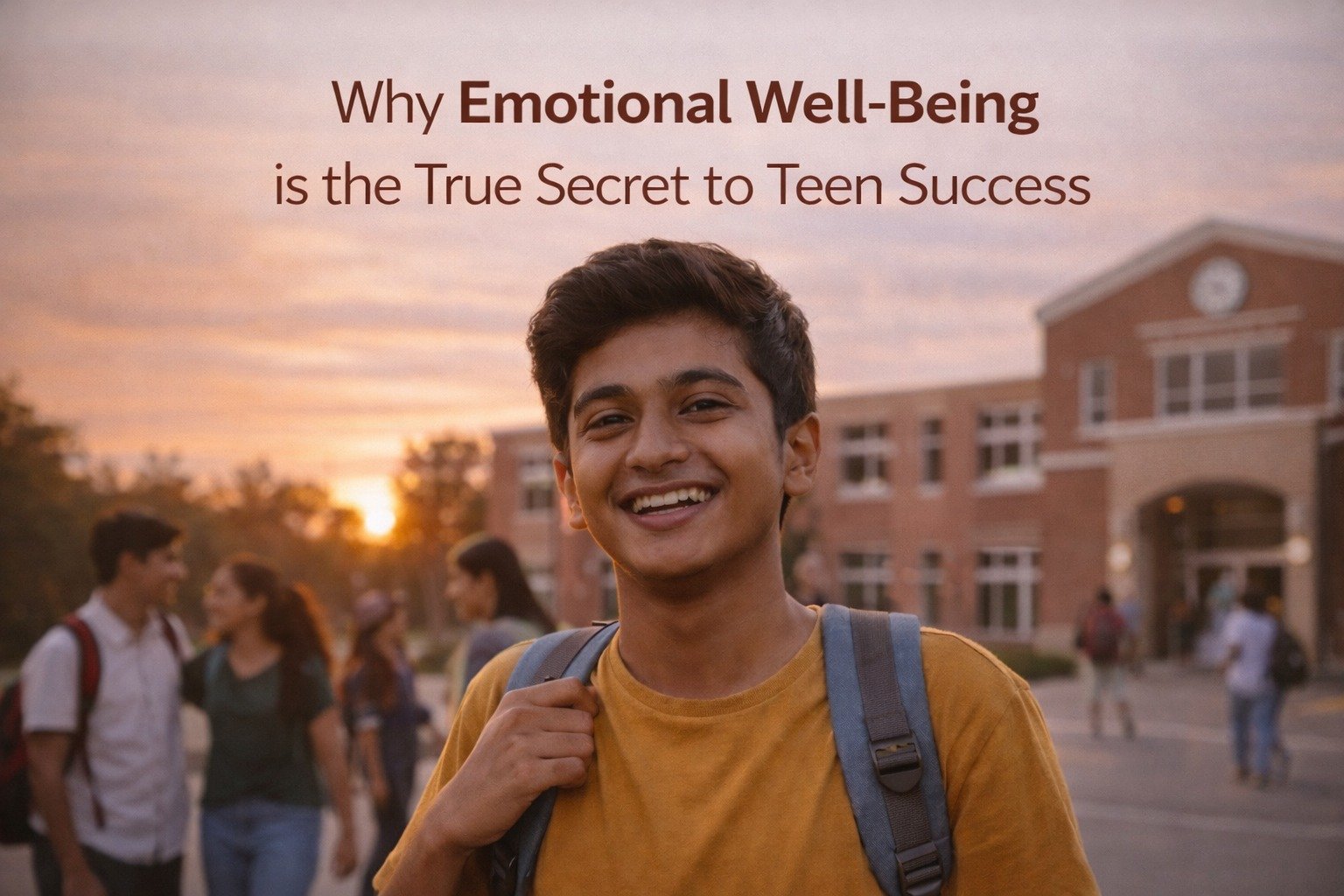
Many teenagers believe that getting good marks and being intelligent is the most important thing for success. Intelligence Quotient (IQ) helps you understand subjects, solve problems, and perform well in exams. But there is another skill that is equally important in life — Emotional Quotient (EQ).
Emotional Quotient means the ability to understand your emotions, manage them, and understand how others feel. During teenage years, emotions can be strong because of exams, friendships, expectations, and changes happening in life. If teenagers learn to manage their emotions well, many problems become easier to handle.
Sometimes a student may be very intelligent but still struggles with anger, stress, or conflicts with parents and friends. Emotional intelligence helps teenagers stay calm, think clearly, and respond wisely instead of reacting immediately.
For example, before exams many students feel anxious. Instead of panicking, emotionally intelligent teenagers try to understand their feelings and find ways to manage them. This helps them focus better and perform well.
Emotional intelligence also improves relationships with parents and friends. When teenagers try to see situations from another person’s point of view, misunderstandings reduce and communication becomes better.
The good news is that emotional intelligence is a skill that anyone can learn and improve with practice.
Three Simple Tools Teenagers Can Use
- Pause and Breathe
When you feel angry or stressed, pause for a few seconds and take three deep breaths before reacting. - Name Your Emotion
Ask yourself: What am I feeling right now? Is it anger, stress, sadness, or worry? Naming the emotion helps you control it. - Think Before You React
Before making a decision or saying something, ask: Will this help or create a problem later?
In the end, success is not only about being intelligent. It is also about understanding emotions, making wise choices, and building healthy relationships. When teenagers develop emotional intelligence along with academic skills, they are better prepared for life.
Think Before You Post: Your Digital Footprint Is Your Digital Identity
Every time you post a photo, comment on a video, share a reel, or check in at a location, you leave a digital footprint. A digital footprint is the record of everything you do online. Just like footprints on sand show where someone has walked, your digital footprint shows your activity on the internet.
In today’s fast-changing world of social media, teenagers share many moments of their lives online though this feels normal and fun, it is important to remember that what you share online becomes part of your digital profile. This digital profile creates an impression about who you are.
Sometimes we post things without thinking about the long-term impact. Oversharing personal photos, posting live locations, or sharing personal details can make teenagers vulnerable to online risks such as fake accounts, scams, cyberbullying, or misuse of information.
Before posting anything online, it is helpful to pause and ask yourself a simple question:
“How would I feel if my parents, teachers, or siblings saw this post?”
If the answer makes you uncomfortable, it may be better not to share it.
Your online behaviour today can influence how others see you in the future. Colleges, employers, and even new friends may look at your social media profile to understand your personality. That is why building a positive digital presence is important.
Do’s for Safe Social Media Use
- Think before you post anything online.
- Keep your personal information private.
- Share positive and respectful content.
- Use privacy settings on your accounts.
- Be kind and responsible in online interactions.
Don’ts to Remember
- Do not overshare personal photos or private details.
- Avoid posting live locations or check-ins.
- Do not post anything when you are angry or upset.
- Avoid sharing information about your school, address, or daily routine.
- Never trust unknown people or fake profiles online.
Social media can be a wonderful space to learn, connect, and express yourself. The key is to use it wisely. Remember, your digital footprint is your digital identity, and every post you make adds to the story the world sees about you.